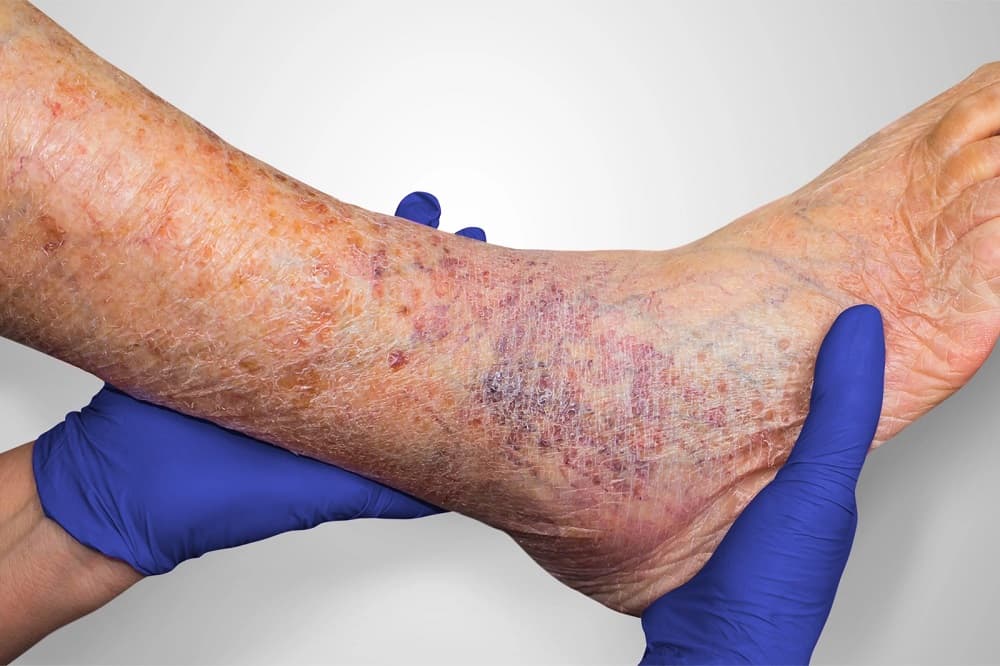
What is stasis dermatitis?
Stasis dermatitis is a long-term eczema of the lower legs that develops when the leg veins no longer return blood to the heart efficiently. Blood and fluid pool in the lower leg (the "stasis"), the skin becomes inflamed, and the result is itchy, dry, discoloured, sometimes weeping skin, usually starting around the inner ankle (NHS, AAD symptoms). It is also called varicose eczema, venous eczema or gravitational dermatitis; all four names describe the same condition (NHS, HSE, AAD overview).
It is common and it is not contagious (AAD overview). More than 20% of people over 70 are affected (DermNet, AAD causes), and it occurs more often in women than in men (BAD, NHS). It is a long-term condition that tends to recur over the years (NHS, DermNet), but with compression, skin care and a few daily habits most people keep it under control and prevent its main complications: leg ulcers (NHS, BAD) and skin infection (DermNet, AAD symptoms).
What causes stasis dermatitis?
The underlying problem is venous insufficiency. One-way valves inside the leg veins normally stop blood from sliding back down under gravity between heartbeats. When those valves weaken or are damaged, blood flows backwards and pools, the pressure inside the veins rises, and fluid and red blood cells leak out into the surrounding tissue (NHS, DermNet, MedlinePlus). The immune system reacts to that leaked fluid, and the skin becomes inflamed (HSE, DermNet; NHS: probably). Varicose veins are the visible sign of the same valve problem, which is why the two so often go together (NHS varicose veins).
Anything that raises the pressure in the leg veins or damages their valves raises the risk (NHS, AAD causes, DermNet venous insufficiency):
- Age: valves weaken over time, and people generally find it harder to move about as they get older (NHS, AAD causes).
- Female sex (NHS, AAD causes).
- Pregnancy, which increases the pressure in the leg veins (NHS).
- Varicose veins and a family history of vein problems (NHS, AAD causes).
- A previous deep vein thrombosis (DVT): the clot damages the valves (NHS). A previous episode of cellulitis in the affected leg is also linked (DermNet, AAD causes).
- Being overweight, which increases the pressure in the leg veins (NHS).
- Standing or sitting still for long periods, little exercise, or being unable to move for a long time after surgery, injury or illness (NHS, AAD causes). The calf muscles act as a pump for the veins, so immobility matters (DermNet venous insufficiency).
- A serious leg injury or leg surgery (AAD causes, DermNet venous insufficiency).
- Heart failure, kidney disease and long-standing high blood pressure (AAD causes).
Not everyone with weak leg veins develops stasis dermatitis, and doctors continue to study why only some people do (AAD causes).
Symptoms
Stasis dermatitis usually begins at the inner ankle and spreads up the lower leg; the tops of the feet can be involved as it worsens (AAD symptoms). It may affect one leg or both (DermNet).
Early signs
- Swelling, often on the inside of the ankle, at the end of the day, which in the early stages clears overnight (AAD symptoms, AAD overview).
- Heaviness, aching or tiredness in the legs when standing or walking (AAD symptoms, MedlinePlus, HSE).
- Itchy, dry, faintly discoloured skin, especially over varicose veins (AAD symptoms).
Established stasis dermatitis
- Change in skin colour: on white skin the patches look red or brown; on brown or black skin they look dark brown, purple or grey and can be harder to see (NHS, HSE).
- Itching and soreness; the eczema is often very itchy and can be painful (BAD, NHS).
- Dry, flaky, scaly skin that cracks, or in a flare red, blistered, weeping and crusted patches (NHS, DermNet, BAD).
- Varicose veins visible on the legs (NHS).
- Skin that stings when ordinary lotions are applied (AAD overview).
- Swelling that no longer goes down overnight as the condition progresses (AAD overview).
Advanced changes
- Hardened, tight, tender skin (lipodermatosclerosis): fibrous tissue builds up under the skin of the lower leg, and the leg can narrow at the ankle so that the calf looks like an upside-down bowling pin or a champagne bottle (NHS, DermNet, DermNet lipodermatosclerosis, AAD symptoms). In its acute phase it is red and painful and can mimic cellulitis (DermNet lipodermatosclerosis); only a clinician can tell the two apart, so a hot, painful leg still needs same-day assessment (NHS cellulitis).
- Small white scars (atrophie blanche), ivory-white patches with tiny red dots around them, which mark healed skin damage (NHS, DermNet atrophie blanche).
- Venous leg ulcers, open wounds that form where the weakened skin has broken, most often on the inside of the ankle (NHS, MedlinePlus).
- Eczema on other parts of the body: a severe flare on the legs can set off eczema patches elsewhere, called secondary eczema (NHS, BAD, DermNet).
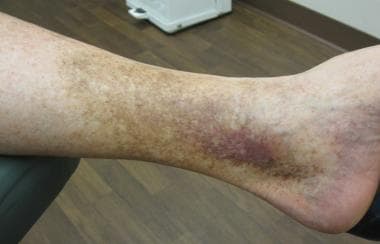
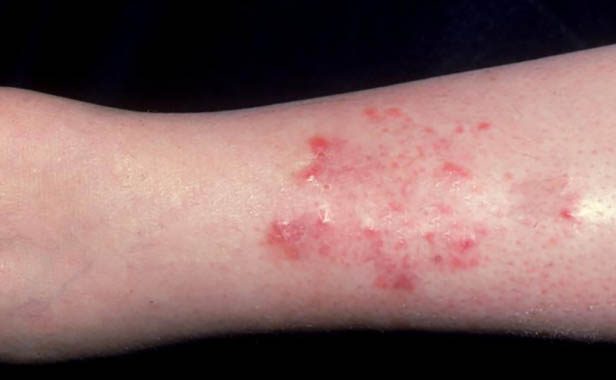
Stasis dermatitis on the lower leg: rusty-brown pigmentation with a darker patch above the ankle (left), and an active flare with red, crusted eczema (right).
Why the skin turns brown, and whether it fades
The rusty-brown or pinpoint pigmentation comes from red blood cells that have leaked out of the congested veins. Their iron pigment, haemosiderin, is deposited in the skin (DermNet, DermNet venous insufficiency). It is a sign of the underlying vein problem; this discoloured skin is difficult to treat and may persist (AAD treatment). Camouflage make-up can hide it, and a light-based treatment (intense pulsed light) has cleared it completely in some people after three to four sessions (AAD treatment, DermNet IPL). The eczema itself, by contrast, is what the steroid course, emollients and compression treat (NHS treatment).
Complications
- Venous leg ulcers. If stasis dermatitis is not treated, the weakened skin can break down after even a minor injury and form an ulcer, an area of damaged skin that takes several weeks or longer to heal (NHS, NHS leg ulcer). In the UK, venous ulcers affect about 1 in 500 people and about 1 in 50 people over 80 (NHS leg ulcer).
- Infection. Scratched or cracked skin lets bacteria in. Yellow crusts suggest a surface infection; a hot, painful, swollen, spreading red area with fever or chills is cellulitis, a deeper infection that needs antibiotics quickly (DermNet, NHS cellulitis).
- Contact allergy. Skin with stasis dermatitis can become allergic to ingredients in the creams and ointments used to treat it. If the rash gets worse after a new product, an allergic reaction is possible and the dermatologist will consider it (DermNet, BAD, AAD treatment).
- Secondary eczema spreading to the arms, trunk or face (DermNet, BAD).
Stasis dermatitis or something else?
Several conditions produce a red or brown rash on the lower legs, and two of them (cellulitis and a clot) need different, urgent treatment. A dermatologist weighs the history, whether one or both legs are affected, and how the rash looks (AAD treatment, DermNet venous insufficiency).
| Condition | How it differs from stasis dermatitis |
|---|---|
| Cellulitis | Usually one leg; often starts with feeling unwell, fever and chills, soon followed by hot, painful, swollen skin. Stasis dermatitis is a long-standing, mainly itchy eczema that can affect both legs (NHS cellulitis, DermNet cellulitis, DermNet). |
| Deep vein thrombosis | Throbbing pain and swelling in one leg, usually the calf or thigh, sometimes with red, blue or darkened skin and swollen veins; needs same-day assessment (NHS DVT). |
| Contact dermatitis | An allergic or irritant reaction to something applied to the skin; it often complicates stasis dermatitis and is suspected when the rash flares after a new cream or dressing. Patch testing identifies the culprit (BAD, DermNet patch tests). |
| Asteatotic eczema | Dry, cracked eczema of the shins caused by water loss from dry skin, linked to low humidity, excessive bathing and ageing (DermNet asteatotic eczema). |
| Discoid eczema | Well-defined round or oval, very itchy, often weeping or crusted plaques 1 to 3 cm across on the limbs (DermNet discoid eczema). |
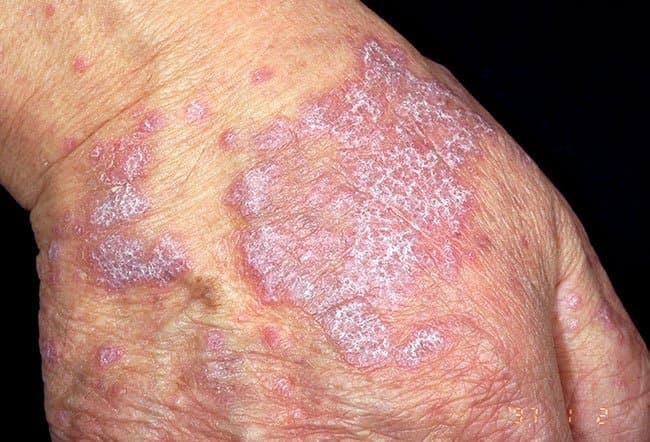
| Psoriasis | Well-defined red, scaly plaques, usually also on the elbows, knees, scalp or lower back (DermNet psoriasis). |
| Fungal infection | Scaly, itchy skin that often starts between the toes or on the soles and spreads with a scaly edge; a skin scraping confirms it (DermNet tinea pedis, BAD). |
| Capillaritis (pigmented purpura) | Harmless reddish-brown patches from leaky capillaries, usually in otherwise healthy people, without the swelling or vein changes of stasis dermatitis (DermNet capillaritis, DermNet venous insufficiency). |
| Lymphoedema | Long-term swelling of a limb caused by a faulty lymphatic system rather than by the veins; one of the conditions a doctor distinguishes from venous swelling (DermNet lymphoedema, NHS lymphoedema, DermNet venous insufficiency). |
When to see a doctor
See a doctor if the skin on your lower legs has become itchy and swollen, dry and flaky, or scaly, crusty or blistered. This matters especially if you have varicose veins, swollen ankles or a previous clot (NHS, HSE). Caught early and treated properly, stasis dermatitis can be prevented from worsening; without treatment it can cause hardening, sores and spread (AAD symptoms).
Get same-day medical help if you notice any of the following (NHS cellulitis, NHS DVT, NHS leg ulcer):
- a hot, painful, swollen, spreading red area, with or without fever or chills, which may be cellulitis;
- sudden swelling and throbbing pain in one leg, which may be a deep vein thrombosis;
- a wound or sore on the leg that is not healing: a dermatologist should examine all wounds and sores on skin with stasis dermatitis (AAD symptoms).
Call the emergency number (112 in Europe) if leg pain and swelling come together with breathlessness or chest pain: a clot can travel to the lungs (NHS DVT).
For the itchy, discoloured skin itself, clear photographs of both lower legs in daylight, together with a short history of vein problems, clots, swelling and the products you use, are usually enough for an iDerma dermatologist to confirm the diagnosis and set out a plan in an online consultation. Compression, however, must not be started until your leg circulation has been checked, which needs an in-person pulse or pressure test; the dermatologist will tell you how to arrange that.
How stasis dermatitis is diagnosed
The diagnosis is clinical: a doctor recognises stasis dermatitis from its appearance and position, together with your history of varicose veins, clots, leg ulcers, cellulitis, leg surgery or injury (NHS, HSE, BAD). Tests are used to check the circulation and to rule out look-alikes, not to confirm the eczema:
- Foot pulses and the ankle-brachial pressure index (ABPI): blood pressure readings at the ankle and upper arm are compared. A large difference points to a problem with the arteries (peripheral arterial disease), in which case compression stockings may not be safe (NHS, HSE, NHS PAD).
- Duplex (Doppler) ultrasound of the leg veins demonstrates reflux (backward flow) through faulty valves, shows vessel damage and rules out a clot (DermNet venous insufficiency, AAD treatment).
- Patch tests, when a contact allergy to a cream, ointment or dressing is suspected: diluted allergens are taped to the back for 48 hours and read over the following days (DermNet patch tests, AAD treatment).
- A skin scraping if a fungal infection is suspected, and occasionally blood tests (DermNet tinea pedis, BAD, AAD treatment).
If the swelling does not fit the vein picture, the doctor will also consider the heart, kidneys and liver, because they can cause leg swelling that looks similar (MedlinePlus, NHS oedema).
Treatment
Treatment works on three fronts at the same time: lowering the pressure in the leg veins, calming the inflamed skin, and protecting the skin so that it does not break down (NHS treatment, MedlinePlus). For most people this is a long-term combination of self-help measures, emollients, a steroid cream for flares and compression stockings (NHS, HSE, NHS treatment).
| Treatment | What it does | How it is used |
|---|---|---|
| Compression stockings or bandages | Squeeze the leg, tightest at the ankle, so blood is pushed back up towards the heart; reduce swelling, heal and prevent ulcers (NHS treatment, DermNet compression therapy). | Fitted after a circulation check; put on first thing in the morning and taken off at night; replaced every 3 to 6 months. Bandaging is used first when swelling or weeping is severe, stockings once it has settled (NHS treatment, BAD, DermNet); a leg ulcer should ideally heal before stockings are started (NHS treatment). Not used when the leg arteries are narrowed (NHS). |
| Leg elevation | Lets fluid drain when the feet are above hip or heart level (DermNet, BAD). | For 15 minutes every two hours when possible, and at night with pillows under the legs or the foot of the bed raised (AAD self-care, NHS treatment, BAD). |
| Emollients (moisturisers) | Reduce water loss, keep the skin supple and stop it cracking (NHS treatment). | Generously over the whole lower leg at least twice a day, even when the skin looks fine, and immediately after washing; an ointment for very dry skin, a cream for less dry skin, and an emollient instead of soap (NHS treatment, BAD). Keep going during flares, when the skin needs it most (NHS treatment). |
| Steroid cream or ointment | Quickly reduces the inflammation of a flare (NHS treatment). | Prescribed in a strength matched to the severity; applied once a day to the affected patches only, usually for 7 to 14 days and for 48 hours after the flare has cleared, about 30 minutes after the emollient (NHS treatment). Hardened skin may need a very strong preparation; long-term use is tapered because strong steroids thin the skin (NHS treatment, DermNet topical steroid). |
| Treating weeping and infection | Dries oozing patches and clears bacteria (DermNet). | Antiseptic soaks or compresses for weeping skin, as directed by the doctor; an oral antibiotic if cellulitis or a crusted surface infection develops (DermNet, AAD treatment). Antibiotics do not help an ulcer heal unless it is infected (NHS leg ulcer). |
| Wound care for ulcers | Keeps the wound clean and moist so it can heal (AAD treatment). | Cleaning, dressings and compression by a trained nurse or clinic; most venous ulcers heal within six months with proper compression (NHS leg ulcer). |
| Itch relief | Stops the scratching that can lead to infection (AAD self-care). | A cool compress for 15 minutes, a thick fragrance-free emollient, and if needed an antihistamine tablet prescribed by the doctor (AAD self-care, AAD treatment). |
| Vein procedures | Close or remove the faulty veins that cause the pressure (NHS varicose veins, DermNet). | A vascular specialist assesses varicose veins and may offer endovenous (heat or laser) ablation, injections or surgery (DermNet, MedlinePlus); in one small study the dermatitis cleared in all 10 patients after their faulty vein was treated, but larger studies are needed (NHS varicose veins, AAD treatment). |
What to avoid
Some products make stasis dermatitis worse rather than better. Avoid applying topical antibiotics, numbing creams, drying lotions or wool-derived moisturisers to the legs unless a doctor has specifically prescribed them, because this skin develops contact allergies easily (MedlinePlus, DermNet). Food supplements and herbal remedies have little evidence behind them for this condition, so check with your doctor before adding them and continue any prescribed treatment (NHS treatment). If the rash gets worse after a new cream or dressing, tell your dermatologist before adding another product; an allergy to something in the treatment plan is a recognised cause (AAD treatment).
Living with stasis dermatitis: daily habits that keep it controlled
- Keep moving. Walking works the calf-muscle pump; if you must sit or stand for an hour, walk briskly for 10 minutes or flex your feet, rise on your toes and bend at the knees regularly (AAD self-care, NHS treatment).
- Raise your legs whenever you rest, ideally above heart level, and sleep with the foot of the bed raised (BAD, NHS treatment).
- Wear your compression every day if it has been prescribed; most people find the swelling drops within a few weeks of starting (AAD self-care). Tell the doctor if the stockings are hard to put on or uncomfortable; custom-made sizes are possible (NHS treatment).
- Protect the skin from injury. Minor knocks against furniture, trolleys and cupboard doors leave wounds that can take months to heal and can start an ulcer (BAD, NHS treatment).
- Wash gently. Use a fragrance-free cleanser or emollient instead of soap, pat dry, and apply the emollient within a couple of minutes while the skin is still damp (AAD self-care, DermNet).
- Dress loosely in soft cotton; tight waistbands and rough fabrics irritate the skin and restrict circulation (AAD self-care).
- Keep to a healthy weight (NHS treatment, AAD self-care) and limit salt, since salty food contributes to fluid build-up in the legs (AAD self-care, NHS oedema).
- Do not scratch. A cool compress or a thick emollient calms the itch without breaking the skin (AAD self-care).
- Check your legs regularly for new cracks, sores or hot red areas, and act on them early (AAD overview, AAD self-care).
Outlook: can stasis dermatitis be cured?
The faulty valves cannot be repaired by skin treatment, so stasis dermatitis does not go away on its own and is best thought of as a condition to manage for life (BAD, AAD self-care). When compression, elevation, emollients and prompt treatment of flares are used every day, the response is generally good: the skin and symptoms improve greatly and complications are prevented (BAD). Treating the underlying varicose veins can reduce the pressure that drives the eczema (DermNet, AAD treatment). The brown pigmentation may persist (AAD treatment), and the thickened, hardened skin of lipodermatosclerosis can be permanent (MedlinePlus), which is why starting treatment early matters (AAD symptoms).
If you recognise these symptoms on your own legs, an online consultation with an iDerma dermatologist can confirm whether this is stasis dermatitis, start the skin treatment, and tell you which in-person checks you need before compression. If you already have a sore that is not healing, a hot and painful leg, or sudden one-sided swelling, use the urgent routes above instead.