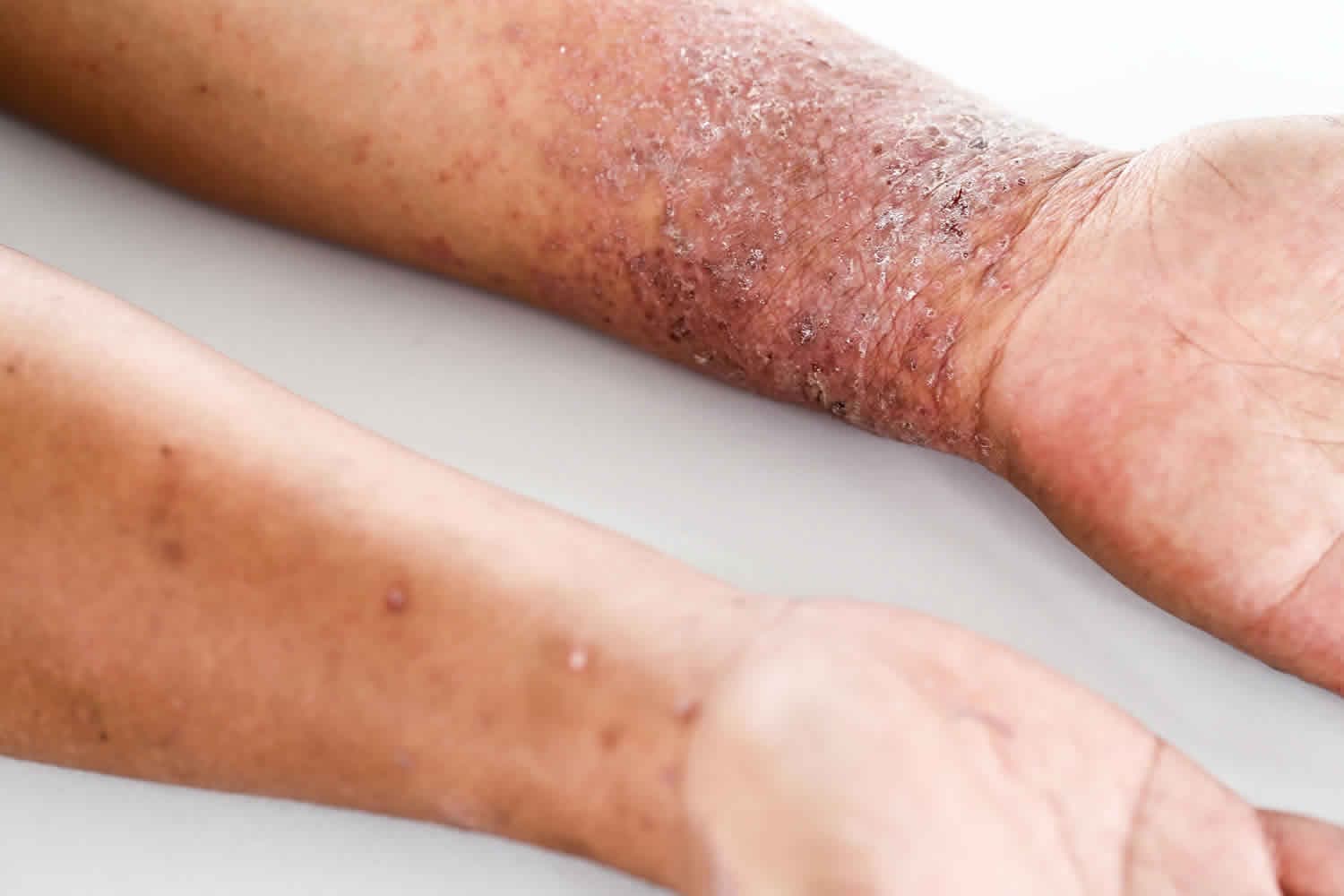
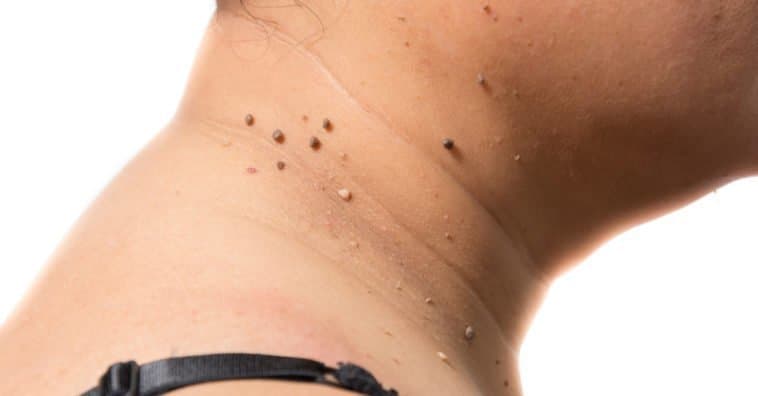
Skin tags are soft, usually harmless growths that often develop on the neck or in skin folds. They do not normally need removal, but a clinician can discuss options if they catch on clothing or cause discomfort. Do not try to cut or tie one off yourself: removal can cause bleeding, infection or scarring. Have a growth checked if it changes, hurts or bleeds. NHS information about skin tags.
What is a skin tag?
A skin tag, also called an acrochordon or soft fibroma, is a small, soft growth that often hangs from a narrow stalk. It may be skin-coloured or darker. Tags commonly appear on the neck, in the armpits, under the breasts or in the groin. They can occur alone or in groups and become more common with age.
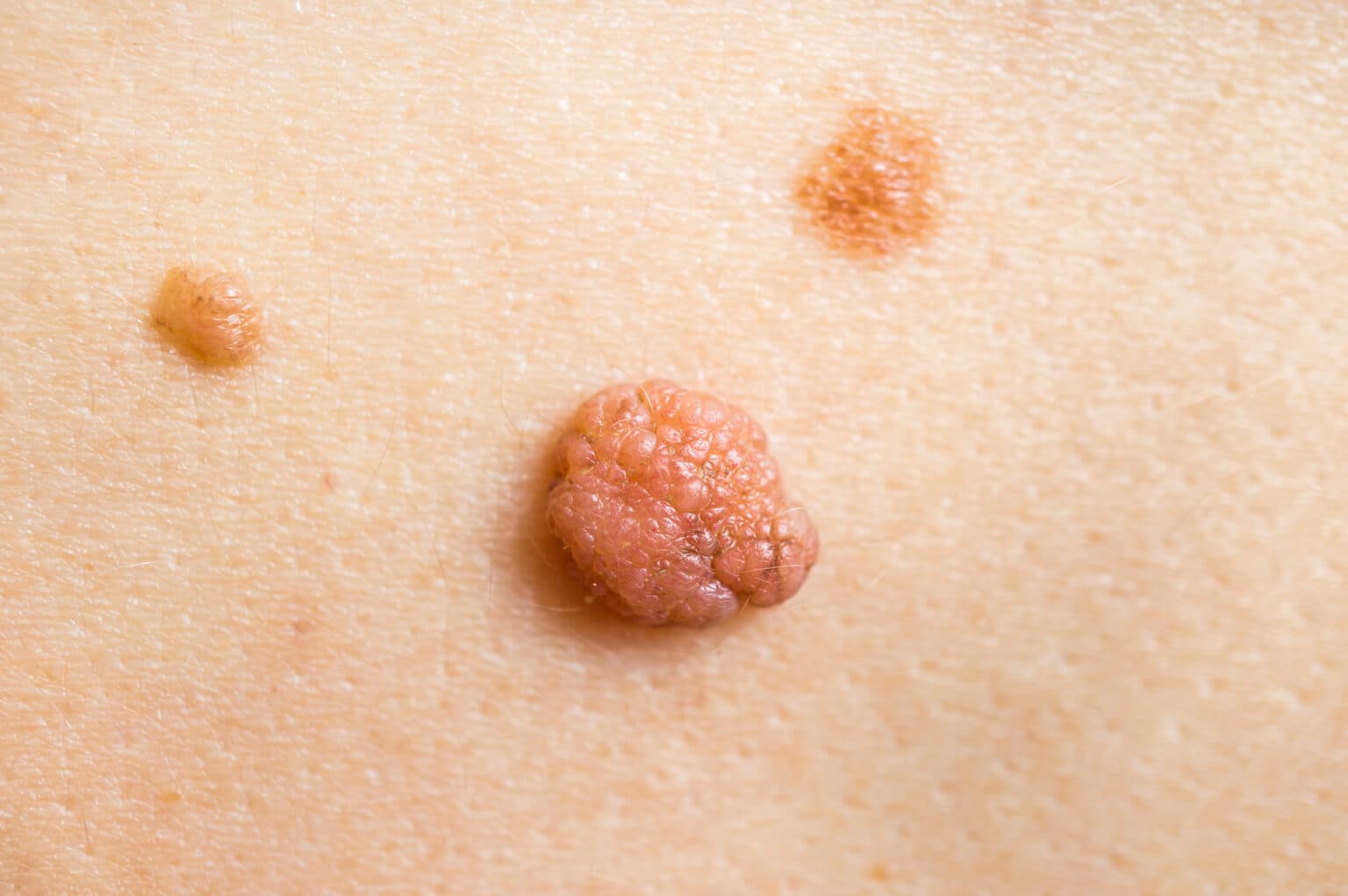
Skin tags are benign growths. They are different from viral warts and pigmented moles, which can need different assessment and treatment. The term “papilloma” can describe other growths, so this article uses “skin tag” specifically for an acrochordon. Do not assume that an unfamiliar growth is a skin tag without having it assessed.
Why do skin tags appear?
The cause is not fully understood. They often form where skin rubs against skin or clothing. They are more common during pregnancy and in people who are overweight or have type 2 diabetes. Having a skin tag by itself does not diagnose diabetes or another underlying condition.
When might removal help?
A confirmed skin tag usually does not need treatment if it is comfortable, stable and not repeatedly injured. Leaving it alone is an option. Removal may be considered for the following reasons:
- Repeated irritation: the tag catches on clothing or jewellery, or is nicked during shaving, causing discomfort or bleeding.
- Symptoms: a growth becomes painful, bleeds or interferes with daily activities. Have the cause checked before arranging removal.
- Cosmetic preference: you would like a confirmed benign tag removed after discussing the likely result and risks.
- Uncertain diagnosis: the growth does not look typical or has changed. Assessment comes first; the clinician may recommend a different investigation or treatment.
What happens during an assessment?
A clinician asks how long the growth has been present, whether it has changed and whether it hurts or bleeds. An examination helps distinguish a skin tag from other lesions. If the diagnosis is uncertain, further assessment or a tissue sample may be needed before deciding on treatment.
A mole has different assessment needs: see our information on mole assessment and removal. Removal methods should not be assumed to be interchangeable for every type of growth.
How can a clinician remove a skin tag?
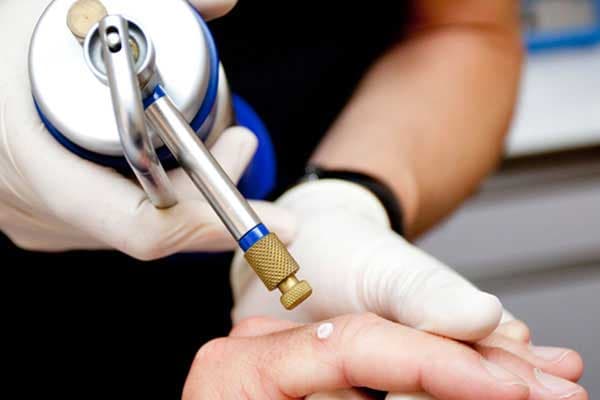
Removal requires an in-person procedure. The method depends on the growth, its size and location, and the clinician’s assessment. Options include:
- Freezing: controlled cold treatment destroys the tag, which then falls off as the area heals.
- Electrosurgery: a clinician uses electrical energy to remove the tag.
- Snipping or surgical removal: the growth is cut off using appropriate instruments. Local anaesthetic may be used.
Ask which option is suitable, what discomfort to expect and how to care for the area afterwards. A method offered for one person may not suit another, particularly if the diagnosis is unclear or the growth is in a sensitive area.
What are the risks?
Possible effects include bleeding, infection, scarring and changes in skin colour. The likelihood and type of effect depend on the method, location and individual healing. Discuss these before deciding whether the benefit of removal is worth it for you.
Do not cut, burn or tie off a growth yourself, or use wart-removal products on it. You may injure the skin or treat something that is not a skin tag. Home removal can cause bleeding, infection and scars.
Aftercare and follow-up
Follow the clinician’s instructions for cleaning the area and using any dressing. Avoid picking the wound or scab. Healing time varies with the treatment and location, so ask when you can return to activities that rub or irritate the area.
Contact your treating clinician or GP promptly if pain or redness increases, the wound produces pus or you feel unwell. If the wound bleeds, apply firm, continuous pressure with a clean dressing for 20 minutes. Seek urgent medical care if the bleeding does not stop.
An online dermatologist consultation can help with an initial assessment and advice on next steps, but removal and some diagnostic checks need an in-person appointment.